Search This Blog

Tuesday, August 25, 2020

How to find and use Standard Deviation in lab work

 Many believe the most important piece of a lab experiment is the result. While of course important, the most important part of experimentation is often not taught in high school - how to do an error analysis! That is, how believable and reliable are your data? If there is some huge spread in measurements with all sorts of uncertainty, then how good can results and conclusions possibly be? 

It reminds me of polling results before big elections. Suppose A is up on B in polling 51% - 49%. If this is all your given in a newscast, and it's the day before, you might cheer that A is going to win!! However, how does this conclusion change when you are informed the uncertainty of the polling is plus or minus 3%? Suddenly, we cannot reach any real conclusion about the result...it is statistically a tie, a tossup, and we'll have a nail-biter waiting for the results to come in! 

The standard way to handle uncertainty for measurements where we do multiple trials is the standard deviation. Check out how to calculate it, and how to interpret it.


Friday, August 21, 2020

Reviewing Constant Acceleration (Kinematics equations)

 Constant acceleration is the primary type of motion studied in first-year physics classes. Things like free fall with gravity (g = 9.8 m/s^2), and cars and runners starting races, or things moving down hills, can all be approximated as having constant acceleration. Keep in mind that it is a rarity to have constant acceleration in real life, but this is still a valid approximation to use. 

Check out a couple of examples to review the use of kinematics equations. This will not go away, even as we get into NON-constant forces and accelerations using the calculus. 


Thursday, August 20, 2020

Using Derivatives: Redefining velocity and acceleration using motion graphs

 Calculus is one of the greatest discoveries in STEM history, and I would say in human history. Isaac Newton developed it in his studies of motion and gravity, and it is a 'tool' we will use from here on out once we get some understanding of derivatives (and later 'anti-derivatives', which will allow us to use integrals). 

Motion graphs like position vs time, velocity vs time, and acceleration vs time, are common features used to analyze motions of objects. And from last year, you may have even related velocity and acceleration to slopes of other graphs. But remember, derivative just means slope, too, only of tangent lines. 

We will now define v = dx/dt, and a = dv/dt...using slopes of tangent lines of strange curves, to determine the motion of object. This takes us to ANY MOTION, not just constant acceleration like last year!! 

Check this out to start getting some understanding. 


Introduction to Derivatives! Let's do some Calculus!

 Calculus is the mathematics of changing quantities. And one of the primary 'tools' for doing this is something called a Derivative. As usual, this is just the fancy name for a certain type of slope - the slope of a tangent line to a curve. 

It will seem weird, perhaps, to talk about slopes of curves. But this is just what we can do. And it might not seem like much at first, but the applications of this idea are vast, and we will figure some of that out over time. 

Keep in mind as you watch the video, that as far as the math goes, we are only using the normal slope equation, slope = rise/run. And then, the single step that changes a normal slope into a derivative, is a limit of two points on the curve getting unimaginably close to each other! 

But let's first define slope and see how to figure it out for a simple curve, a basic parabola. Check it out! 


Tuesday, August 18, 2020

The Earth's Magnetic Field weakening in certain areas, a potential reversal coming??

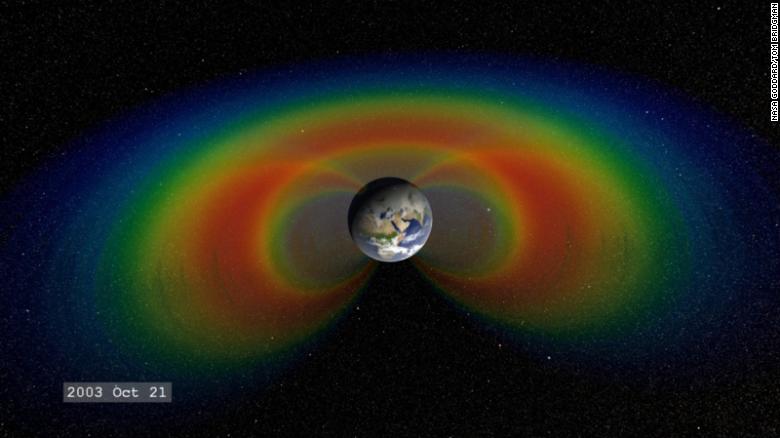
 The earth's magnetic field is necessary for life as we know it. It protects us from charged particles from outer space. But we know that the field has gone through dozens of reversals - there have many times when a compass needle pointed south, instead of north! Computer simulations are starting to reveal how and why this occurs, and signs of it have been observed for the past decade or two. A new 'dent' in the earth's magnetic field around one of the well known anomalies in the South Atlantic Ocean seems to fit into the continuation weakening of the field, and follows characteristics revealed and predicted in simulations leading up to reversals. 

We'll see what happens over the next couple centuries. We are actually 'overdue' for a reversal, the last one happened around 800,000 years ago. Check out a good NOVA episode on the earth's magnetic field. 

Van Allen belts help protect Earth from being hit with radiation.

Sunday, August 2, 2020

3 Chem/Phys Summer Camp

The new school year is almost upon us. And let's not hide the fact that everyone - students, teachers, parents, administrators - are some combination of nervous, scared, angry, confused, anxious, depressed, relieved, and fill in your own emotion. 

Our approach is more along the lines of developing a mindset that we are not just a class, but a learning team. We are more than classmates, we are teammates. We support each other, help each other, cheer for each other. We feel bad when another is having a bad day and try to help. We feel good when everyone 'gets it' and does well. 

This is a challenging time for everyone, so let's help each other not because some teacher wants you to...let's all actually want to help each other on our own! Let's be caring, thoughtful, compassionate and empathetic human beings who find meaning and joy in helping others through challenges. 

Class Information
You will be getting Google Classroom course numbers to sign in by the time school begins. In fact, all of your teachers will have a Google Classroom when school begins. In Physics, we will not only use Classroom, but Doc V also has the key class and unit documents housed on his school website (with Unit folders on the 3 Chem-Phys page), as well as this class blog. Check out the various pages on both the website and this blog, where there is all sorts of information not only used or class, but dozens of academic teams and extracurricular options each of you will be able to pursue if interested the next two years. 

TODAY - MONDAY, AUG. 3
We are going to break off in the Summer Camp and give you a bit of time to try a couple things asynchronously! Get used to this, because that combination of 'synchronous' Zoom class sessions and 'asynchronous' independent work will be the norm in every one of your classes. By the way, this is more like a college or adult work schedule than what you are used to in school. 

This means you have more individual control over your schedule, but also more individual responsibility for your own learning! 

To Try:
  • Spend about 10 minutes to skim through the Physics website and the Physics blog. Begin to get a sense of resources, topics, activities, history, and so on. Perhaps something will already jump out at you and seem interesting! Make note of anything like this, and we can chat about it later. 
  • At any time, post questions and what has been effective and not effective for you during elearning to this Google Sheet. Or you can email us separately if you don't want to share publicly. 
  • Try a basic at home lab about rotational speed. You need to be logged into your eths202 account to access. We will try some of these throughout the year when we are remote. For this one, you can find any kind of sphere, any kind of disk or cylinder (like a full can of something), and if possible, a ring or hollow cylinder (like an empty can with both ends cut out). These are all objects that can roll, and you can do experiments to see if they all make it down a ramp in the same time and have the same speed at the bottom of the ramp. You did not do rotational motion last year, so this will be a new set of discoveries for you based on experimental information! 
  • Our first website recommendation for the year! Check out a 3D version of the Powers of 10 video, which shows the range of smallest things to the largest! Very cool! 
Thank you for joining us today, and I cannot wait to get to know you and work with you!! 

Friday, July 24, 2020

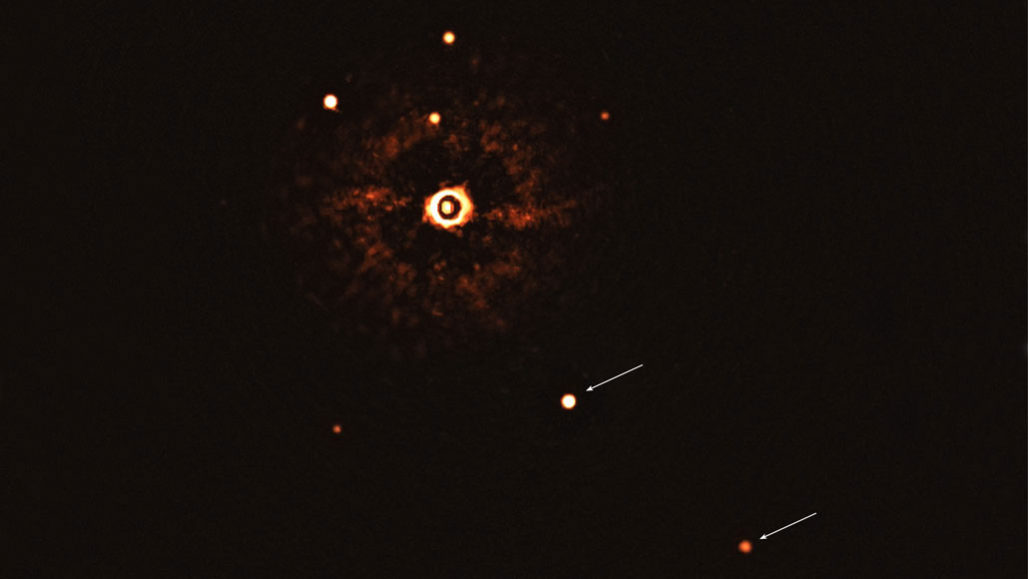
Too cool to pass up - A photo of another solar system!

Check out this article in Science News, where astronomers have a photo of a Sun-like star with two gas giant exoplanets orbiting. Way cool!! 

star TYC 8998-760-1 with exoplanets

Friday, July 17, 2020

Being Black in America: UIUC Chancellor Robert Jones

Dr. Robert Jones is the current Chancellor at the U. of Illinois at Urbana-Champaign, which is one of the largest public universities in the country and one of the largest and most prominent research universities in the world. He recently gave an interview about being black in America. He thinks our approach should be one we don't hear discussed a lot, which is as a public health crisis.

That would be an interesting mindset and approach to take as a nation, just as many suggest we should treat gun violence as a public health crisis...big, important issues that become politically and emotionally charged in a hurry when taking them on head-on, could be looked at in a different light, as public health, which is something that invites working together because public health is more inclusive and doesn't care what color one's skin is; just as a virus or bacterium doesn't care who its host is, the public as a whole must figure out how to handle the disease.

Women in Physics - Nadya Mason

I want to spotlight every so often, underrepresented groups in the sciences, especially fields like physics, math, computer science, and different areas of engineering, which are the big fields that still have the largest gaps in diversity - meaning lower numbers of women and people of color who take on those disciplines as majors, and who end up working in those fields. The situation is a little better since I was in graduate school in physics nearly thirty years ago, where professors were certainly predominately white and Asian men, but let's celebrate progress when we see some.

One of the rising stars in physics works at my alma mater, UIUC. Nadya Mason is an African-American woman who is a world expert in quantum mechanical nanocircuitry and is heavily involved in getting more minorities into the highest levels of STEM work, and was recently interviewed for an alum publication. She also has a TED talk outlining her work, and I recommend watching it since she talks about our gap and fear between the technologies we use everyday and our near complete ignorance of how they work.


Sunday, July 5, 2020

Wholeness - the possibilities to a deeper, unforeseen part of Nature thanks to Quantum Mechanics

An American physicist, David Bohm, who Einstein once called his "spiritual son," got into science because he thought it was enough to help humanity solve its worst problems. Bohm thought poverty was the world's single biggest problem. But after years of doing science, he concluded science was not enough for the human race to find a new reality of happiness and being rid of its biggest problems. This thought, plus the bizarre reality of quantum mechanics/quantum field theory, as well as more strangeness of general relativity, led him on a quest to also determine what consciousness itself is.

These are all pieces of the human quest to figure out answers and reasons for the most fundamental questions: how and why did the universe begin, why are we here, what is the meaning of life, what is our connection to the universe...

Bohm took an approach to find out what was beyond the reaches of science, and actually came up with a scientific way of thinking about the "hidden variables" in quantum mechanics. This was perceived as a realm where we could not observe those variables, but that realm was responsible to a true interconnectedness, or wholeness, of the universe. Our consciousness is connected to the collective consciousness of humanity, which is connected to the universe as a whole. His 1952 paper on hidden variables was looked at by world experts in quantum mechanics, led by Robert Oppenheimer (the 'father of the atomic bomb' since he led the Manhattan Project during WWII), and they could not find anything incorrect about Bohm's theory...but Bohm was then sent into scientific exile from the U.S. when McCarthyism ramped up at the start of the Cold War.

It is a fascinating and intriguing story, where one must think in terms of science, philosophy, religion, and mysticism (Eastern mystics have thought about this interconnectedness and wholeness for millenia). A really well-done movie about Bohm's quest is below, with very well known physicists being interviewed, as well as the Dalai Lama.